Parchisi STAR Online
- 4.7
- Rating
- 100.00M
- Installs
- Free
- Price

 Analysis by App-foxy
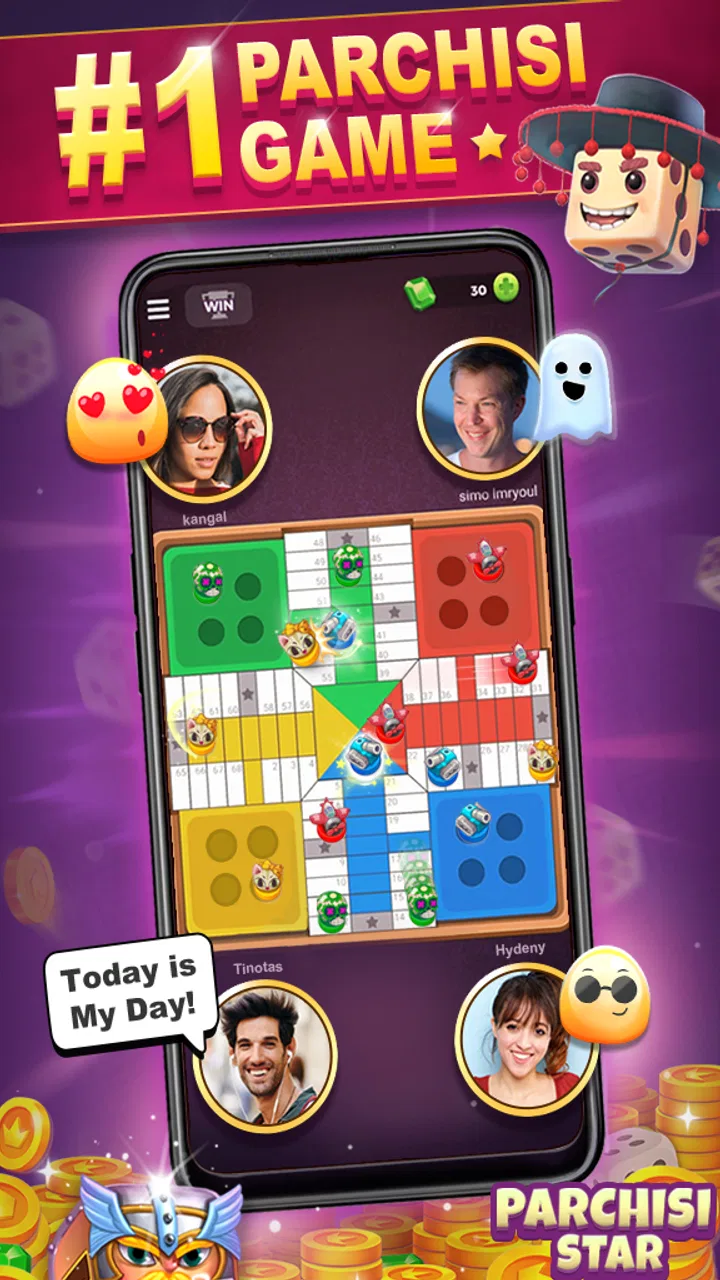
I installed Parchisi STAR Online expecting a familiar board-game time killer, but its strongest quality became clearer after using it in ordinary shared-device situations. It is a free board game from Gameberry Labs that brings the classic race around a four-color board into online matches with real players, chat, and emoji reactions. I found it easy to understand within a few turns, yet lively enough to keep a casual session from feeling like a static digital version of a tabletop game.
The game is available for everyone, and it has reached over 100 million installs with a 4.7 average from around 3.2 million ratings. Those figures suggest broad appeal, but they do not remove the need to think about how it fits your household. The important questions are practical: can different people use it comfortably, what happens when a match is interrupted, and is the social layer suitable for the person holding the phone?
How it feels when several people share the same device
The most natural household use is a short handoff session. One person can start a game, make a move, and pass the device to another player when the turn changes. That makes it useful during a quiet evening, while waiting somewhere, or when two people want a board game without finding dice and counters. The rules are familiar enough that a relative who has never played a mobile board game should not need a long lesson.
You May Also Like

 AccuWeather: Weather Radar
AccuWeather Review: A Quick, Clear Forecast for Everyday Decisions
For everyday plans, the best forecast is the one you can understand quickly. AccuWeather makes rain timing, radar, and local conditions easy to act on, with a few trade-offs.

 Hill Climb Racing
Why Hill Climb Racing Still Turns Crashes Into One More Run
A tiny car, a bumpy hill and one more upgrade: Hill Climb Racing keeps resurfacing because its simple chaos makes every near-miss feel personal.

 AliExpress - Shopping App
AliExpress Makes Global Shopping Feel Personal, but Shoppers Bear the Risk
AliExpress turns a global marketplace into a pocket-sized discovery engine. Its reach is useful, its shopping loop compelling, and its trade-offs easy to miss.

 Lords Mobile: Kingdom Wars
Lords Mobile Is a Kingdom-Building Routine, Not a Quick Match
A case-by-case verdict on the building, battles, device demands, and social commitments that make Lords Mobile rewarding for some players and exhausting for others.

 PDF Scanner app - TapScanner
TapScanner Makes Paperwork Easier to Capture, Check, and Share
TapScanner makes scanning with a phone feel less like a rescue operation and more like a dependable step in getting work done. Its capture tools are useful, though not flawless.

 Block Blast!
 Shows How Much a Puzzle Game Can Leave Out
A quiet grid game shows why puzzle players increasingly value instant clarity, repeatable skill and low-pressure play—and where the genre still needs to catch up.
More From Our News Desk
View All News


I especially liked the low barrier to entry. You do not need to memorize a complicated card system or learn a large collection of character abilities. The central task is to move pieces around the board and make sensible choices with the roll you receive. That simplicity makes it a reasonable choice for mixed-age play, although younger users may still need an adult nearby when online interaction is involved.
Shared-device play also reveals a small but important weakness: passing a phone around is less comfortable than playing on a physical board. The screen is personal, turns can be missed if people are talking, and a busy room makes it easy for somebody to forget whose move is active. I found that announcing the player’s name before handing over the device prevented most confusion. It sounds obvious, but this simple habit makes a short family session much smoother.
The online focus changes the atmosphere compared with a traditional local board game. Instead of relying only on people in the room, you can play against real players through the internet. That is convenient when nobody else at home is available, but it also means the experience is not entirely under your household’s control. A shared family game and a public online match should be treated as two different activities, even when they use the same board.
What a first session is actually like
My first impression was that the game explains itself through play rather than through a long tutorial. The board, colored pieces, dice result, and available moves are visually direct. That matters for occasional players who may open the game after several weeks and need to remember the basics without starting from zero.
The familiar rules create an interesting balance. Beginners can participate quickly, while experienced players still have choices about which piece to advance and when to take a risk. Luck remains central, so a carefully chosen move cannot guarantee a win. I see that as part of the appeal for relaxed play, but it may frustrate anyone looking for a strategy game where planning consistently outweighs chance.
Emoji and chat add a social layer that is more immediate than a silent board. A quick reaction can acknowledge a lucky roll or keep a match friendly without typing a full message. At the same time, social tools can distract from the board and may feel uncomfortable for people who simply want a quiet game. I would treat them as optional atmosphere, not as a reason to choose the app by themselves.
Setting boundaries before the phone changes hands
The game is free to download, which makes trying it straightforward, but it includes in-app purchases ranging from $0.49 to $219.99 per item. That range is worth discussing before a shared device is used by several people. I would not hand the phone to a child without first agreeing who is allowed to make purchases and ensuring that the device’s normal purchase protections are configured appropriately.
This is not a criticism of the board itself; it is a household-management issue. A child may understand that the game is free and still not understand that optional items can cost real money. An adult who shares a phone with a partner or sibling should also avoid assuming that everyone knows the same purchase rules. A thirty-second conversation before play is more useful than trying to resolve an accidental purchase later.
Another boundary concerns attention. Online matches are not ideal if a player may need to leave suddenly to answer a call, help a child, or move between activities. I found the game best suited to a defined window, such as a few rounds after dinner, rather than something left running while everyone is multitasking. If interruption is likely, a physical board or a game designed specifically for very short solo sessions may be the better choice.
Device access is another practical consideration. If several people use the same phone, decide whether the game is a communal activity or an individual one. Mixing those expectations can cause arguments: one person may see an unfinished match as available entertainment, while another may consider it their personal progress. Keeping the app associated with one clear player, or agreeing on when it may be opened, avoids that friction without needing complicated household rules.
Coordinating turns, matches, and online play
Coordination matters more than I expected because the game combines a simple board with live social contact. For a household session, I recommend choosing one person to start the match and one place where the phone will remain between turns. That prevents the device from wandering into another room and makes it easier to notice when the game is waiting for an action.
When playing with people in the same room, say the move out loud before tapping. This helps everyone follow the reasoning, especially when two pieces appear to have similar options. It also turns the app into a small teaching tool: a parent can explain why moving one piece is safer while another player learns to recognize the consequences.
For online matches, coordination means something different. You are not managing only the people at home; you are also sharing a game with strangers who may have a different pace and attitude. I would discourage treating every opponent as part of a family activity unless an adult is comfortable with the social element. The board can be suitable for everyone while the surrounding conversation still deserves attention.
The chat and emoji functions can make a match feel warmer, but they can also create pressure to respond. My advice is to keep the focus on the board and not let a reaction dictate a move. A player who feels rushed by another person’s message should remember that the purpose of the game is to make a decision, not to satisfy the loudest participant.
One useful routine is to separate “learning matches” from “competitive matches.” In the first, explain the board and let a new player experiment without correcting every decision. In the second, agree that everyone will play seriously and accept the luck of the dice. This distinction prevents an experienced player from overwhelming a beginner and makes the game more enjoyable for both.
Age, trust, and the social side
The Everyone content rating matches the uncomplicated board concept, and I can see why the game works for a wide age range. The rules are recognizable, the objective is clear, and a child can understand the basic turn structure with help. Still, an age label should not be treated as a substitute for supervision when online chat or emoji interaction is available.
For younger players, I would begin with an adult present and explain the difference between playing a board game and communicating with people online. The useful lesson is not to panic about every interaction, but to make clear that a player never needs to share personal information or continue a conversation that feels uncomfortable. Since the game connects players beyond the room, trust should be built through shared use rather than assumed automatically.
Older children and teenagers may prefer using the app independently, especially if friends already play it. In that case, the household conversation should focus on practical habits: do not spend money without permission, do not reveal private details, and stop using the social features if they become unpleasant. These are sensible boundaries for this particular game because its appeal is not only the board; it is also the contact with other players.
Adults should consider their own tolerance for chance and social noise as well. Someone who enjoys traditional Parchisi may appreciate the convenience, while someone who dislikes losing because of an unlucky roll may find repeated matches tiring. Likewise, a person seeking a calm offline activity may prefer a local board-game app with no online opponents or a physical set. The app is most convincing when its online energy is a benefit rather than an unwanted complication.
Where it stands beside ordinary alternatives
Compared with a physical Parchisi or Ludo set, this game removes the need to store pieces, set up a board, or find enough people in the same room. It also gives you access to real players when the household is busy or nobody else wants to join. The trade-off is that the phone becomes the center of attention, and the social experience depends on an internet-connected environment rather than on everyone sitting around the same table.
Compared with a purely offline board-game app, this one feels more communal because of its online matches, chat, and emoji reactions. That is its clearest point of difference for me. If you want a quick opponent at an inconvenient time, the online structure is useful. If you want to hand a device to a young child and walk away, the social layer makes a more cautious approach sensible.
It is also less suitable than a deeper strategy board game for players who want long-term planning to dominate the outcome. The dice introduce uncertainty, and that keeps matches approachable but limits how much skill can control each result. I would choose it for friendly competition, familiar rules, and quick shared entertainment—not for serious tactical analysis.
Version, device fit, and everyday expectations
The current version is 1.288.2, and the game runs on Android 7.0 or later. That makes compatibility relatively friendly for people using older supported Android phones, although the actual comfort of play will still depend on screen size, battery condition, and how smoothly the device handles online activity.
On a small phone, a single player can follow the board easily, but a group gathered around the screen may need to sit close. A tablet-sized display would be more comfortable for shared viewing, though I would still keep the turn order verbal when several people are watching. The game is free, so testing it on the household device before planning a regular routine is a sensible approach.
I would also avoid judging the app after one rushed match. Its best use is revealed over several situations: a quiet solo online game, a shared session with someone who knows the traditional rules, and a supervised match where a younger player learns the social boundaries. Each setting highlights a different strength and a different source of friction.
My household verdict
After using it as both a casual online game and a shared household activity, I think Parchisi STAR Online is a good fit for people who want familiar board rules with the convenience of playing against real players. Gameberry Labs keeps the central idea accessible, while chat and emoji give matches a more social feel than a silent digital board.
My recommendation comes with clear conditions. Before sharing the device, agree on purchase boundaries, decide who is responsible for an unfinished match, and introduce younger players to the online side with an adult nearby. Those steps do not take much effort, and they address the main household concerns without taking away the fun.
I would recommend it to families and friends who enjoy light competition, to players who often cannot gather a full group in person, and to anyone who wants a recognizable board game that can be picked up quickly. I would skip it if you need a completely offline experience, dislike chance-based outcomes, or want a private child-focused game with no contact beyond the room.
For me, the best description is a convenient shared game that needs sensible social and spending boundaries. Its free entry, broad age rating, and familiar play make it easy to try, while the online features determine whether it becomes a welcome household pastime or simply another app that needs careful handling on a shared phone.
FAQs for Parchisi STAR Online
01What is Parchisi STAR Online and how does it work?
Parchisi STAR Online is a digital version of the classic board game Parchisi, also known as Ludo in some regions. The app allows players to compete against friends or random opponents online. Players roll dice to move their pieces around the board, aiming to get all their pieces to the home area first. It's a mix of strategy and luck, with simple rules that are easy to grasp.
02Is Parchisi STAR Online free to play?
Yes, Parchisi STAR Online is free to download and play. However, it includes in-app purchases that allow users to buy coins or other game enhancements. These purchases can help speed up progress or unlock special features, but they are entirely optional. The game is fully playable without spending money.
03Can I play Parchisi STAR Online with friends?
Absolutely! Parchisi STAR Online offers a multiplayer mode where you can invite friends to play, or you can challenge random players from around the world. You can create private rooms for a more personalized experience or join public games to meet new opponents. It's a great way to enjoy the game socially.
04Are there any ads in Parchisi STAR Online?
Yes, the game does include ads. These are integrated into the app to support its free-to-play model. Ads may appear between games or during certain transitions. While they can be a bit intrusive, they are generally short and can often be skipped after a few seconds. Users can opt for in-app purchases to remove ads.
05What platforms is Parchisi STAR Online available on?
Parchisi STAR Online is available on both Android and iOS platforms. You can download it from the Google Play Store for Android devices and the Apple App Store for iOS devices. The game is regularly updated to ensure compatibility with the latest operating systems and to add new features or fix bugs.
Pros
- Engaging multiplayer experience.
- Easy to learn and play.
- Colorful
- vibrant graphics.
- Regular updates and events.
- Supports multiple languages.
Cons
- Contains in-app purchases.
- Ads can be intrusive.
- Requires stable internet.
- Occasional connectivity issues.
- Limited offline play options.

Parchisi STAR Online
Gallery